

General
How London Became the World’s Startup Capital
London has emerged as the world’s most international startup hub by combining deep capital markets, permissive regulation, global talent access, and timezone advantage. Unlike Silicon Valley, it increasingly serves founders building for global—not domestic—markets from day one. London’s rise to startup dominance did not arrive with a single breakout moment. There was no defining IPO […]
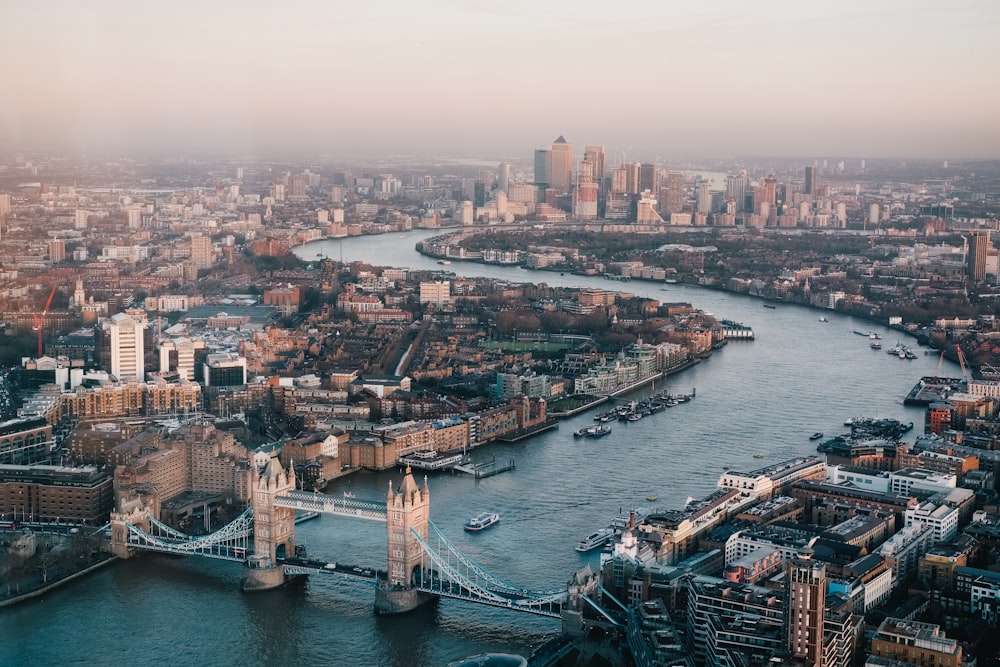
London has emerged as the world’s most international startup hub by combining deep capital markets, permissive regulation, global talent access, and timezone advantage. Unlike Silicon Valley, it increasingly serves founders building for global—not domestic—markets from day one.
London’s rise to startup dominance did not arrive with a single breakout moment. There was no defining IPO wave, no generational consumer platform that suddenly rewired the global internet. Instead, the city’s ascent has been quieter, incremental, and structural—built over more than a decade through policy alignment, capital accumulation, and an unusually international founder base.
By 2026, those forces have converged. London now hosts more venture-backed startups founded by non-domestic entrepreneurs than any other city, according to multiple industry tallies. Its tech workforce is among the most globally diverse in the world. And its startups increasingly treat the UK not as a primary market, but as a launchpad for Europe, Africa, the Middle East, and the United States.
This matters because the geography of innovation is shifting. The world’s next generation of startups is less likely to be born in a single massive domestic market and more likely to be built for fragmented, cross-border demand. London, more than any other city, has adapted to that reality.
At the center of this shift is London itself—a city whose economic identity has long been shaped by global flows of capital, people, and regulation, and which has now repurposed those traits for the startup era.
London’s venture ecosystem
London’s venture ecosystem looks different from its American peers. Silicon Valley remains unmatched in scale, but it is still optimized for US-first companies. London’s startups, by contrast, are structurally international. Founders are often immigrants or second-generation Britons. Early hires speak multiple languages. Product roadmaps are built around regulatory and cultural differences from day one.
That orientation did not happen by accident. Britain’s post-2008 policy framework quietly encouraged early-stage risk capital through tax incentives such as the Enterprise Investment Scheme and Seed Enterprise Investment Scheme, reducing downside risk for angel and early venture investors. While these programs were never designed to “build a startup capital,” they created unusually fertile ground for experimentation.
Over time, capital followed. London now sits at the intersection of traditional finance and venture capital in a way no other city does. Pension funds, sovereign wealth vehicles, family offices, hedge funds, and global banks operate within minutes of early-stage founders. That proximity has increasingly mattered as venture markets matured and easy capital disappeared elsewhere.
The result is a funding environment that is less exuberant than Silicon Valley’s peak years, but more durable. London startups tend to raise in smaller increments, scale more conservatively, and face pressure to generate revenue earlier. In today’s tighter global capital climate, those traits look less like constraints and more like advantages.
For fintech, the city’s dominance is particularly pronounced. London combines regulatory credibility, financial infrastructure, and customer density in a way few jurisdictions can replicate. The Financial Conduct Authority’s early embrace of regulatory sandboxes allowed startups to test products under supervision, lowering barriers without weakening oversight. That balance attracted founders who wanted legitimacy as much as speed.
As fintech matured, adjacent sectors followed. Enterprise software, cybersecurity, climate technology, and applied AI have grown rapidly, often anchored by founders who trained in finance, consulting, or engineering roles before launching companies. The ecosystem’s density means expertise travels quickly across sectors, accelerating second- and third-time entrepreneurship.
Talent flows reinforce this cycle. Despite political turbulence over immigration in the past decade, Britain maintained relatively open pathways for high-skilled workers and entrepreneurs compared with many peers. London’s universities, combined with its cultural pull, continue to draw students who often stay to build companies. For founders from emerging markets, the city offers something rare: access to Western capital without cultural or geographic isolation from home regions.
The timezone advantage has also become more important in a remote-first world. London’s working day overlaps with Asia in the morning and the United States in the afternoon, making it a natural coordination point for distributed teams. For startups operating across continents, that daily overlap reduces friction in ways that compound over time.
None of this means London is without weaknesses. Late-stage capital remains thinner than in the United States, pushing some of the city’s most successful startups to list or raise abroad. Housing costs and infrastructure strain continue to test talent retention. And political uncertainty still shapes long-term regulatory risk in ways founders cannot fully ignore.
Yet the broader trend is clear. London is no longer trying to outcompete Silicon Valley on its own terms. Instead, it has built a different model—one optimized for a fragmented, multi-polar global economy where startups are born international or not at all.
For founders, the city increasingly represents optionality. Companies can start in London, hire globally, raise from diverse capital pools, and expand into multiple regions without committing to a single dominant market. For investors, it offers exposure to global growth without the concentration risk of one geography or regulatory regime.
Looking ahead, London’s challenge will be to preserve that openness as competition intensifies. Other cities are learning quickly, and geopolitical pressures are rising. But if the past decade is any guide, London’s strength lies precisely in its ability to absorb change rather than resist it.
In a world where startups are shaped as much by borders as by code, London has turned its historic role as a global crossroads into a modern competitive advantage. That, more than any single policy or company, explains how it became the rest of the world’s startup capital.