

eCommerce
Swiggy Integrates MCP to Enable AI-Based Ordering Across Apps
Swiggy has integrated Model Context Protocol (MCP) into its platforms, enabling AI assistants to directly place food orders on behalf of users. The move positions Swiggy among early consumer internet companies preparing for AI-native commerce workflows. Swiggy’s decision to integrate Model Context Protocol (MCP) marks a notable inflection point for India’s food delivery sector, as […]
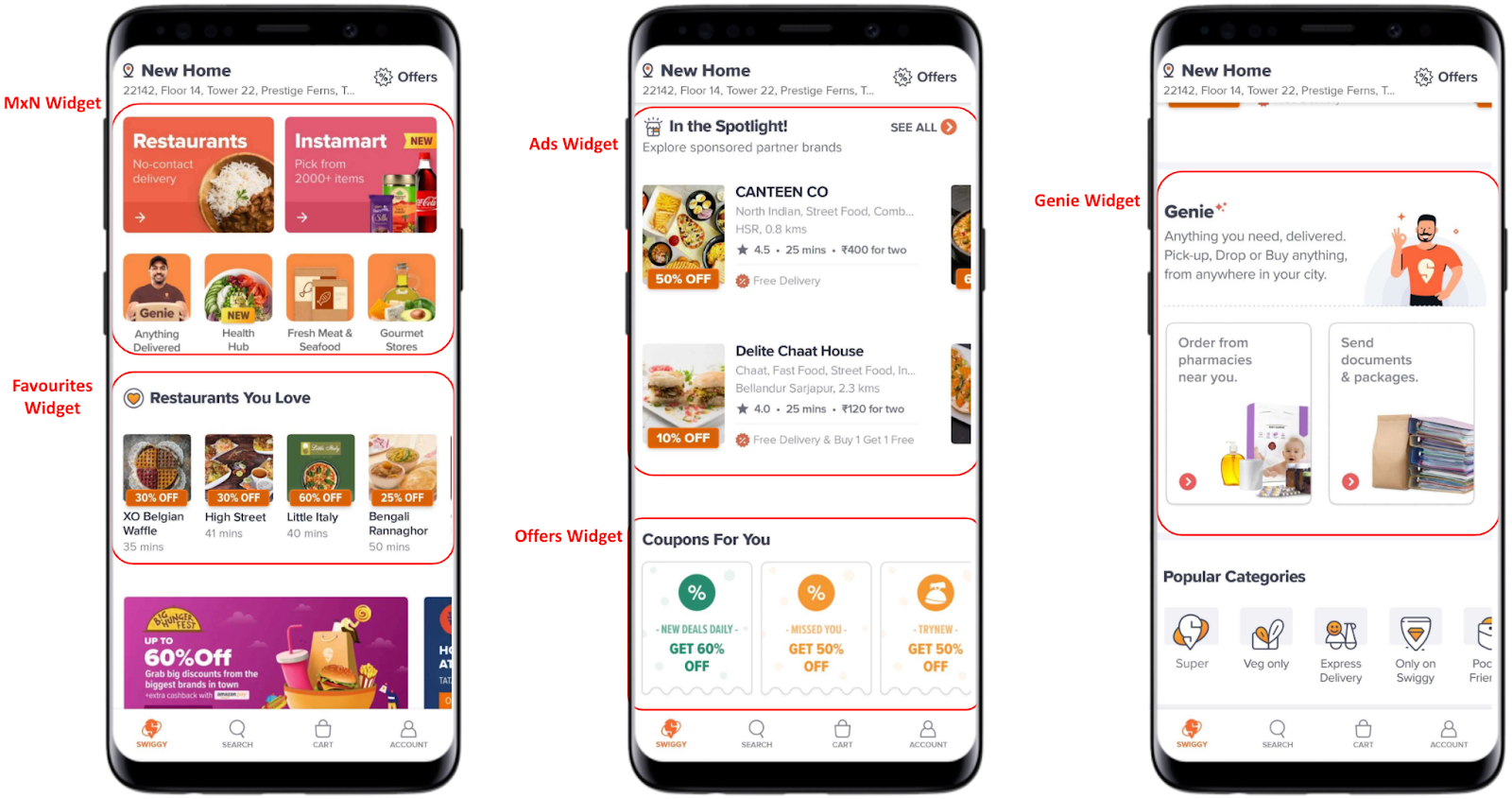
Swiggy has integrated Model Context Protocol (MCP) into its platforms, enabling AI assistants to directly place food orders on behalf of users. The move positions Swiggy among early consumer internet companies preparing for AI-native commerce workflows.
Swiggy’s decision to integrate Model Context Protocol (MCP) marks a notable inflection point for India’s food delivery sector, as consumer internet platforms begin preparing for a future where artificial intelligence agents—not humans—initiate and complete transactions.
The integration allows AI assistants to interact directly with Swiggy’s systems to discover restaurants, build carts, and place orders across its platforms, including food delivery and quick commerce. While still early in adoption, the move reflects a broader recalibration underway in global tech: platforms are being re-architected for machine-to-machine commerce.
For Swiggy, the shift is less about launching a new consumer feature and more about future-proofing its infrastructure as generative AI becomes embedded into everyday decision-making.
From human taps to machine instructions
MCP, or Model Context Protocol, is an emerging open standard designed to let large language models securely access tools, data, and services without bespoke integrations. By supporting MCP, Swiggy enables AI agents—such as personal assistants or enterprise copilots—to operate within predefined boundaries while executing real-world actions.
In practical terms, this means a user could ask an AI assistant to “order my usual dinner from Swiggy,” and the assistant would be able to interpret preferences, check availability, and complete the transaction without manual input.
The company has indicated that the integration spans its broader ecosystem, rather than being limited to a single app surface. That distinction matters. It suggests Swiggy is treating AI ordering as a platform capability, not a standalone experiment.
Why this matters now
The timing of Swiggy’s MCP integration aligns with accelerating global interest in agentic AI—systems that can plan and act autonomously. Over the past year, AI labs and platform companies have increasingly focused on enabling models to move beyond text generation into task execution.
For consumer internet businesses, this raises an existential question: if AI agents become the primary interface, which platforms will they choose to transact with?
By adopting MCP early, Swiggy is effectively making itself “legible” to AI systems. Instead of forcing future assistants to rely on brittle scraping or unofficial APIs, the company is offering a structured, permissioned way to interact.
This mirrors earlier platform transitions, such as the shift from desktop to mobile or from websites to apps. Companies that adapted early often gained distribution advantages that were difficult to replicate later.
Competitive positioning in foodtech
India’s food delivery market is dominated by a small number of large platforms, with Swiggy and Zomato accounting for the bulk of urban demand. While pricing, delivery times, and restaurant selection remain key competitive levers, AI readiness is emerging as a quieter differentiator.
There is no indication yet that AI-driven ordering will materially impact volumes in the near term. Consumer behavior tends to change gradually, and trust in autonomous purchasing remains uneven. However, infrastructure decisions made today often shape optionality years down the line.

For Swiggy, MCP integration could eventually support:
- Personalized reordering via third-party assistants
- Voice-based ordering across devices
- Enterprise or hospitality use cases
- Cross-platform bundling with grocery or quick commerce
Competitors that delay similar integrations may find themselves reacting rather than shaping standards.
Implications for restaurants and partners
For restaurant partners, AI-initiated orders are unlikely to look meaningfully different from regular digital orders in the short term. However, over time, increased automation could change demand patterns.
AI systems tend to optimize for consistency, ratings, and prior preferences. That could favor restaurants with stable menus, predictable preparation times, and strong historical performance metrics.
At the same time, platforms will need to ensure that AI-driven discovery does not entrench incumbents at the expense of newer or smaller vendors—a concern regulators have already raised in other algorithmic marketplaces.
Swiggy has not detailed how ranking or discovery logic will evolve in AI-mediated contexts, but transparency and guardrails are likely to become more important as machine agents gain influence.
Part of a broader platform recalibration
Globally, platform companies across ecommerce, travel, and fintech are exploring similar integrations. The underlying logic is consistent: if AI assistants become a dominant interface, platforms must be accessible at the protocol level, not just through consumer-facing apps.
MCP has gained attention precisely because it offers a standardized approach, reducing the need for custom integrations with each AI provider. For developers and AI labs, this lowers friction. For platforms like Swiggy, it reduces dependency on any single AI ecosystem.
This is especially relevant in India, where the AI landscape is fragmented across global models, domestic startups, and enterprise deployments.
Regulatory and trust considerations
Allowing AI systems to place orders raises predictable questions around consent, error handling, and accountability. Who is responsible if an AI orders the wrong items? How are cancellations, refunds, or disputes handled?
While these issues are not unique to Swiggy, early adopters will effectively help define norms. Clear user authorization flows, transaction logs, and override mechanisms will be critical to building trust.
From a regulatory standpoint, India has yet to issue AI-specific consumer commerce guidelines, but policymakers are increasingly focused on algorithmic accountability. Platforms enabling autonomous transactions will likely face closer scrutiny as adoption grows.
Looking ahead
Swiggy’s MCP integration does not immediately change how most users order food. Instead, it signals a strategic acknowledgment that the interface layer of the internet is shifting.
Just as mobile apps reshaped consumer behavior over the past decade, AI agents may redefine how decisions are made and executed. Platforms that prepare early—quietly, infrastructurally, and without hype—stand to benefit the most.
For Swiggy, the move reinforces its positioning not just as a food delivery company, but as a technology platform anticipating how commerce itself may be initiated in the years ahead.
Based on publicly available information, the integration remains in its early stages. How quickly it translates into real-world usage will depend less on Swiggy’s technology and more on how comfortable users become with letting machines order dinner on their behalf.