
AI
Jack Ma Calls for Creativity-First Education in China’s AI Era
Jack Ma has warned that China’s education system must move beyond rote learning as artificial intelligence accelerates workplace change. Speaking to educators, the Alibaba founder said creativity and human judgment will define future competitiveness in an AI-driven economy. When artificial intelligence becomes good enough to outperform humans at standardized tasks, the value of education shifts. […]
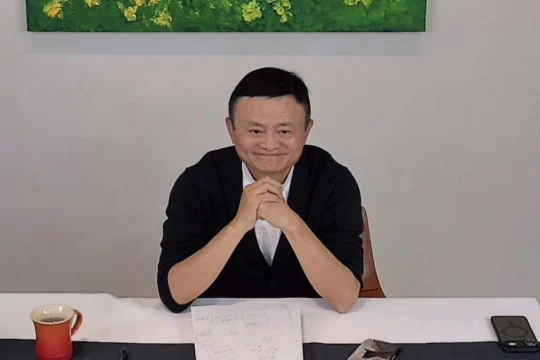
Jack Ma has warned that China’s education system must move beyond rote learning as artificial intelligence accelerates workplace change. Speaking to educators, the Alibaba founder said creativity and human judgment will define future competitiveness in an AI-driven economy.
When artificial intelligence becomes good enough to outperform humans at standardized tasks, the value of education shifts. That was the central message from Jack Ma, who has re-emerged in public discussions by urging China to rethink how it prepares students for an AI-dominated economy.
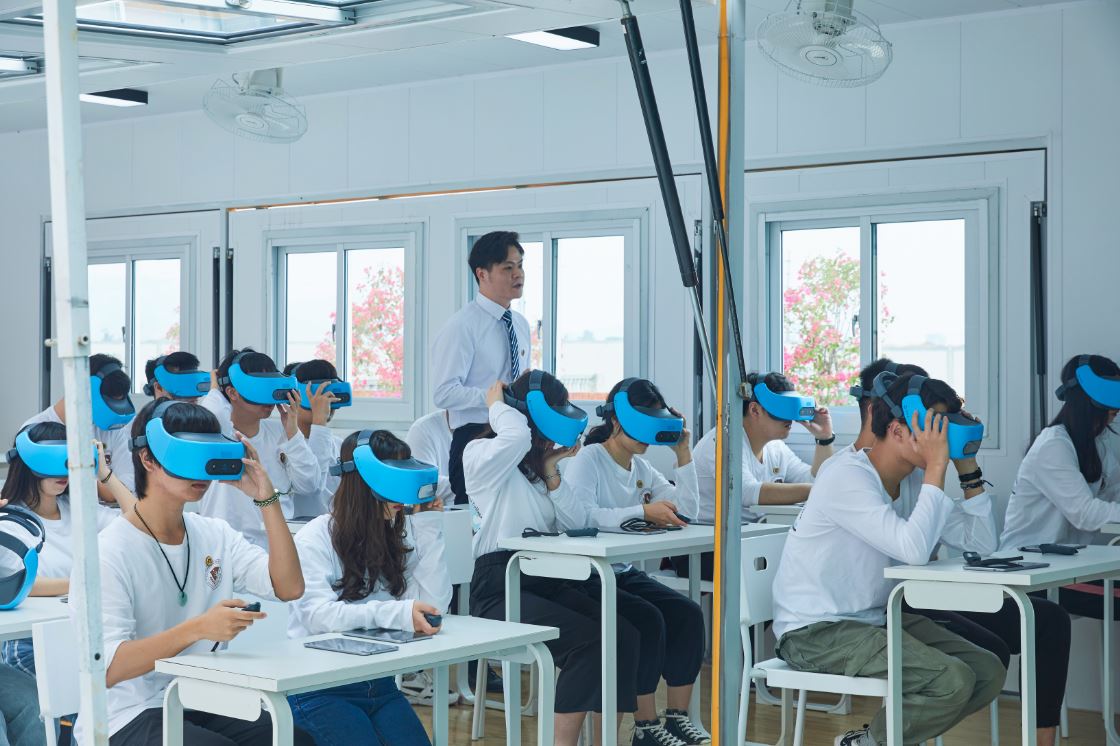
At a recent education-focused event in China, Jack Ma argued that systems built for memorization and exam performance are increasingly misaligned with a labor market shaped by automation. AI, he said, will excel at tasks that reward speed, pattern recognition, and recall. Humans will remain competitive only by focusing on creativity, independent thinking, and emotional intelligence.
The remarks come as China accelerates national AI adoption, while policymakers simultaneously grapple with slowing growth, youth unemployment, and structural changes in white-collar work. Education has become a central pressure point in that transition.
Why Jack Ma’s comments matter now
China’s push into artificial intelligence is no longer aspirational. Generative AI tools are being deployed across finance, manufacturing, logistics, and public services. Domestic technology companies, including Alibaba Group, have integrated large language models into enterprise software and consumer platforms.
At the same time, China’s education system remains heavily exam-driven, with the gaokao university entrance exam still shaping outcomes for millions of students each year. Critics have long argued that this model rewards compliance over originality.
Jack Ma‘s intervention is notable because it connects two policy priorities that are often discussed separately: AI leadership and human capital development. His message suggests that without education reform, China risks producing a workforce optimized for tasks machines are increasingly able to do better.
From founder to education advocate
Since stepping back from day-to-day corporate leadership, Jack Ma has increasingly positioned himself as an education-focused voice. He has held visiting academic roles abroad and invested time in teacher training initiatives through philanthropic channels.
While he no longer speaks on behalf of Alibaba, his status as one of China’s most recognizable entrepreneurs gives his comments weight, particularly among educators and local officials looking for signals from influential business leaders.
Importantly, Jack Ma framed AI not as a threat to be resisted, but as a force that exposes weaknesses in existing systems. In his view, education must be redesigned around what machines cannot replicate easily: imagination, values, collaboration, and ethical judgment.
The limits of rote learning in an AI economy
The argument that automation diminishes the value of memorization is not new, but it has gained urgency as generative AI demonstrates capabilities once thought to require human cognition. Tasks such as drafting reports, analyzing data, and even basic coding are increasingly automated.
In that context, education models optimized for standardized testing face structural limits. If success is measured primarily by accuracy and speed, AI systems will continue to outperform humans.
Ma’s emphasis on creativity reflects a broader global shift in how future skills are defined. International education bodies and labor economists increasingly highlight problem-solving, adaptability, and interpersonal skills as durable advantages in automated economies.
For China, the challenge is compounded by scale. Any meaningful shift away from exam-centric education would affect tens of millions of students, thousands of institutions, and deeply embedded social expectations about merit and mobility.
Signals for policymakers and schools
While Jack Ma does not hold a formal policy role, his comments align with recent signals from Chinese authorities. Education officials have acknowledged the need to reduce academic pressure on younger students and encourage more holistic development, though implementation has been uneven.
The rise of AI adds urgency to those debates. If China aims to compete globally in advanced technology, it must cultivate not only engineers and data scientists, but also designers, product thinkers, and leaders capable of navigating complex social and ethical trade-offs.
For schools and universities, Ma’s remarks underscore the need to rethink curricula, assessment methods, and teacher training. Project-based learning, interdisciplinary study, and open-ended evaluation are often cited as alternatives, but scaling them within China’s system remains a significant challenge.
Implications for startups and the tech workforce
For startups operating in China’s AI ecosystem, the education debate has practical consequences. Talent shortages are already emerging in areas that require both technical fluency and creative application, such as AI product design and human-centered engineering.
If education reform lags technological change, companies may face higher training costs and longer onboarding cycles. Conversely, a shift toward creativity-focused education could expand the pool of adaptable workers capable of moving across roles as technology evolves.
Jack Ma’s comments also resonate beyond China. As governments worldwide race to integrate AI into their economies, the tension between traditional education models and emerging skill demands is becoming a shared challenge.
A familiar voice, a changing context
Jack Ma’s reappearance in public discourse is itself a reminder of how much China’s tech landscape has changed over the past decade. Once synonymous with rapid platform expansion, today’s conversations center on sustainability, regulation, and long-term competitiveness.
By focusing on education, Ma has chosen a domain that sits at the intersection of economic policy, social stability, and technological ambition. His argument is less about immediate reform and more about direction: whether systems built for the industrial age can be adapted for an AI-driven future.
Looking ahead, the question is not whether AI will reshape work, but whether education systems can evolve quickly enough to keep humans relevant within it. Ma’s warning suggests that creativity is no longer a luxury skill—it is becoming an economic necessity.