
Business and Finance
Qantas Power Banks Ban: What Travelers Need to Know About the New Airline Safety Rules
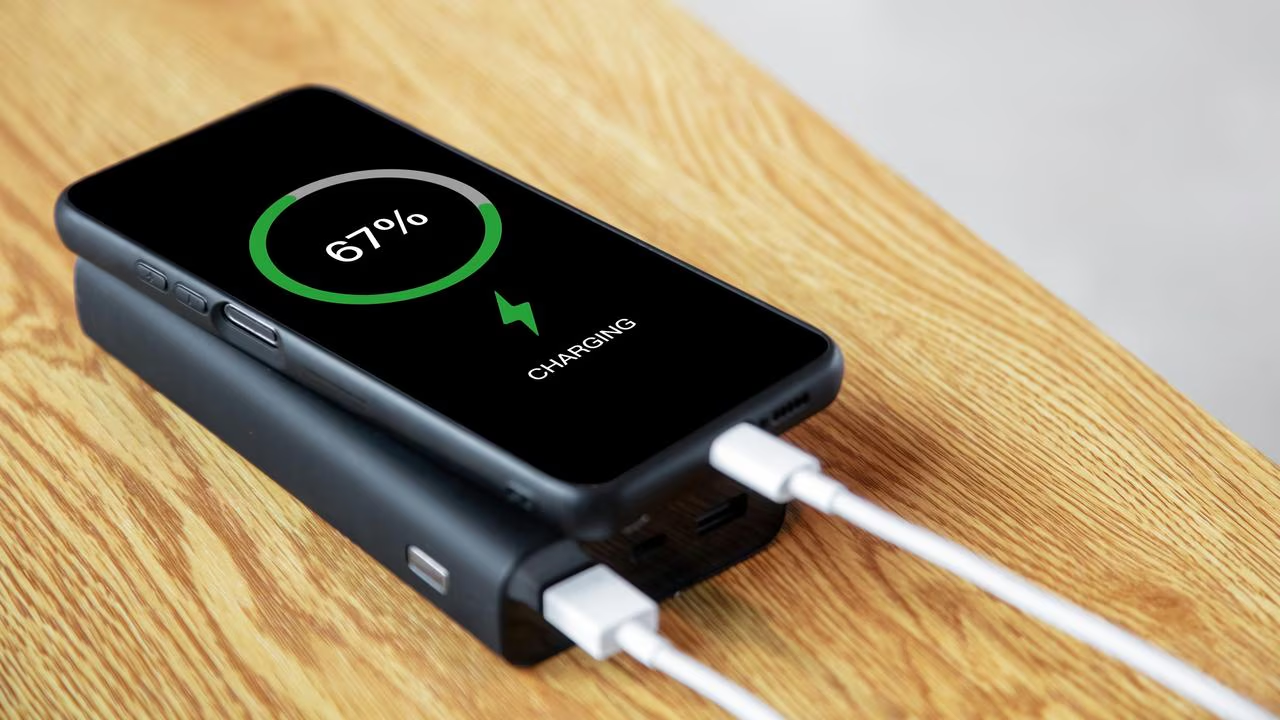
Australian Airlines Introduce Nationwide Power Bank Ban
Starting this December, passengers flying with Qantas, Jetstar, and Virgin Australia will no longer be allowed to use or charge power banks during flights. The decision, confirmed by all three major carriers, is part of a coordinated effort to reduce the risk of fires caused by lithium batteries.
According to ABC News, the new Qantas power banks policy will take effect on December 15, 2025, for Qantas, QantasLink, and Jetstar, while Virgin Australia will implement its own restrictions from December 1, 2025. The move follows similar international safety measures and is fully endorsed by aviation authorities.
Why Airlines Are Banning Power Banks
The new rules do not ban passengers from bringing power banks on board entirely, but they strictly prohibit their use or charging during flight. Passengers will still be permitted to carry up to two power banks in their cabin baggage, provided they meet specific watt-hour limits and are stored safely.
A Qantas spokesperson said the decision was made “to mitigate fire risks associated with lithium-ion batteries,” which have been known to overheat or ignite when damaged. Virgin Australia’s Chief Operations Officer, Chris Snook, explained that while power banks are generally safe, the ban “minimises any potential risks associated with these devices.”
Aviation safety experts note that lithium-ion batteries can ignite suddenly, and cabin fires are among the most dangerous emergencies for pilots and crew to manage. By eliminating the possibility of passengers charging or using power banks in-flight, airlines are reducing one of the main triggers for such incidents.
Details of the New Power Bank Rules
Under the updated guidelines, all passengers must follow the same strict storage and usage rules, regardless of their airline or ticket class.
- Effective Dates:
- Qantas, Jetstar, and QantasLink – December 15, 2025
- Virgin Australia – December 1, 2025
- Qantas, Jetstar, and QantasLink – December 15, 2025
- Onboard Use: Prohibited across all flights
- Charging Power Banks: Not allowed under any circumstances, including in-seat USB ports
- Charging Devices: Passengers can charge phones, tablets, or laptops using in-seat power outlets, where available
- Maximum Number of Power Banks: Two per passenger
- Maximum Capacity:
- Up to 160Wh for Qantas and Jetstar
- Up to 100Wh for Virgin Australia (100–160Wh requires prior airline approval)
- Up to 160Wh for Qantas and Jetstar
- Storage: Must be easily accessible in a seat pocket, under the seat, or on the passenger’s person
- Checked Baggage: Power banks are strictly prohibited
Qantas will allow power banks to be stored in nearby overhead lockers, while Virgin will not, requiring passengers to keep them within immediate reach.
How Will This Affect Passengers?
For travelers accustomed to charging devices using power banks during long-haul flights, this change will require some adjustment. Most Qantas and Virgin aircraft already have USB charging ports available at every seat, and both airlines plan to expand these installations across their fleets.
Virgin Australia stated that 88 percent of its Boeing 737 fleet is already equipped with in-seat power, with full coverage expected by mid-2026. Jetstar, however, offers power outlets only on select Boeing 787 Dreamliners used for long-haul routes to Asia.
Passengers on domestic or short regional flights are advised to fully charge their devices before boarding.
What About Medical Devices?
The airlines confirmed there will be no exemptions for power banks, even for passengers with medical conditions. Battery-powered medical devices such as portable oxygen concentrators will still be permitted onboard under existing safety rules, but their batteries cannot be charged in-flight. Virgin customers may bring up to two spare batteries of up to 160Wh, provided they are declared during check-in.
Safety Concerns Behind the Ban
The decision follows several in-flight incidents involving overheating batteries. The Australian Transport Safety Bureau (ATSB) has recorded at least five power bank-related fires on flights since 2016.
In July 2025, a Virgin Australia flight from Sydney to Hobart experienced smoke in an overhead compartment, believed to be caused by an overheated power bank. Internationally, a South Korean Air Busan aircraft was destroyed earlier this year after a battery fire spread uncontrollably.
Experts like former pilot and aviation safety researcher Natasha Heap support the ban, warning that “a cabin fire is one of the most serious emergencies crew can face.” She added that even small lithium fires “burn at extremely high temperatures and can re-ignite, making them difficult to extinguish.”
Global Airlines Following Suit
Australia’s new power bank rules mirror similar policies already adopted by airlines such as Singapore Airlines, Emirates, Cathay Pacific, Thai Airways, and EVA Air. The International Air Transport Association (IATA) classifies power banks as “spare lithium batteries,” which must be individually protected against short-circuiting and kept out of checked luggage.
Conclusion: A Small Change for Safer Skies
The Qantas power banks ban represents another step in tightening global aviation safety standards. While it may inconvenience some travelers, industry experts say the benefits outweigh the drawbacks. Lithium battery fires have increased by more than 90 percent in Australia over the past two years, and airlines are taking no chances.
Passengers planning to fly with Qantas, Jetstar, or Virgin Australia this holiday season should prepare accordingly—charge devices before boarding, store power banks properly, and keep safety in mind.Stay updated on global travel and safety news at StartupNews.FYI