
FinTech
Why Fintech Apps to Send Money Abroad?
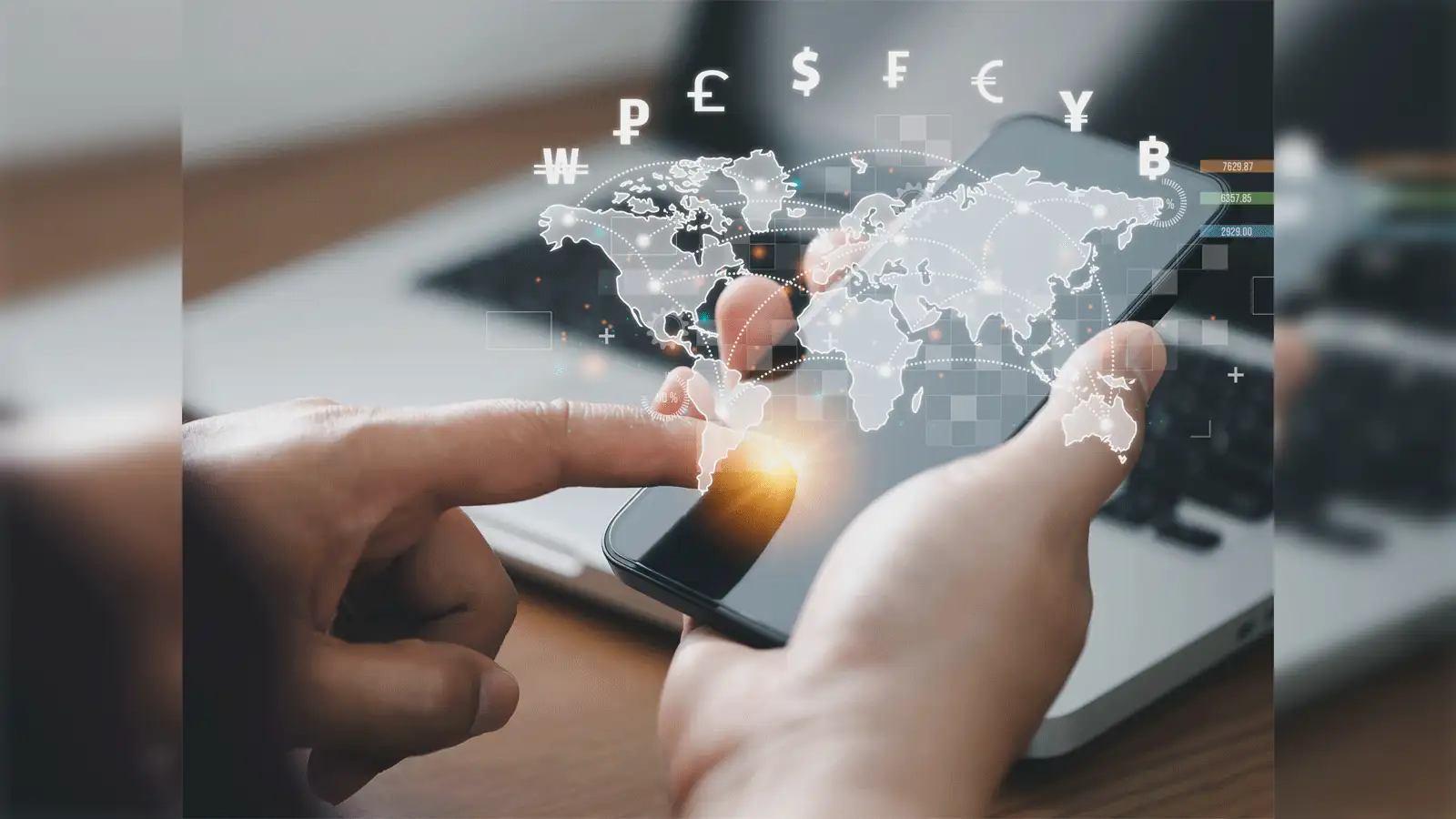
Barely two decades ago, sending any amount of money abroad meant that customers had to visit a bank branch and queue up for a considerable amount of time to initiate the transaction.
It also meant paying exorbitant service charges without any precise knowledge of when the money would get to the recipient.
Visiting and queuing up in bank branches to send money abroad are fast becoming a thing of the past, thanks to the emergence of fintech apps.
In a few clicks, customers can use their selected app to send money abroad instantly at their convenience and at a relatively low cost.
This article takes a look at the traditional and fintech ways of sending money side by side, and highlights why fintechs are gradually dominating the space.
The Traditional Way
While traditional banks have come a long way with how they facilitate cross-border money transfers, they are still very rough around the edges.
Even before the launch of formal banking in 15th-century Italy, there has always been a need to exchange money across borders.
To meet this need, early traditional banks initially instituted a correspondent banking system, helping banks across the globe exchange information, even if it takes months. But as technology emerged, there was a shift to telegraph networks, which were relatively faster and laid the foundation upon which SWIFT was founded.
Today, many major banks rely on SWIFT for processing international transactions.
However, despite the improvements over the centuries, some age-old challenges persist:
- High costs: The cost of sending money abroad using traditional banks is considerably high. In fact, the World Bank notes that sending money abroad using traditional banks could cost as much as 12% of the transaction amount. The Migration Policy Institute also suggests that, in some cases, bank-based international money transfers cost up to 16% of the transaction amount.
- Slow delivery: From correspondent banking to SWIFT, traditional banks’ delivery times have gone from months to 1-5 business days. This is a commendable improvement in speed, but it’s still not enough when urgency is crucial.
- Complex procedures: Initiating certain transfers through banks still requires visiting a bank branch to queue up. More so, transfers can take days to clear, and banks don’t always provide instant confirmation of arrival, making it difficult to immediately know when there is an issue.
These issues make traditional banks not really the best fit for sending money abroad in modern times.
The Rise of Fintech
The proliferation of the internet and mobile technology brought sweeping changes to global finance, especially international money transfer systems.
From the late 1990s to the mid-2010s, the world saw a sharp rise in fintech service providers attempting to disrupt the financial industry by offering far better services than traditional banks. And in a lot of ways, many of them succeeded.
McKinsey & Company defines fintechs as companies that rely on cloud services and technology to provide financial services to their customers.
Hence, major fintech companies are focused on digitization and conveniently providing their services online.
Another key attribute of fintechs is that they usually focus on one or a few similar financial services. A fintech platform may, for instance, focus solely on providing services that cater to savings, loans, credits, budgeting, or international money transfers, among others.
By niching down, they can appropriately map resources to keep improving on a financial service, making them incredibly better than their counterparts in the given field. Traditional banks, on the other hand, have to deal with trying to divvy resources across multiple services and products, risking relatively poorer service quality across the board.
Why Fintech Apps Are Winning
The basic approach of fintechs in focusing on and improving a financial service is why international money transfer apps are taking a huge chunk of the market share of traditional banks.
For every flaw that banks have when it comes to sending money abroad, fintechs are several steps ahead to make them non-existent.
These improvements can be seen in how fintech apps address the age-old cross-border transfer challenges that banks have been dealing with for centuries.
Today, people using fintech apps can benefit from:
- Zero to low-cost transfers: Fintech money transfer operators and mobile operators are the channels that offer international money transfers at the lowest costs, according to the World Bank. In fact, migrants can use fintech apps to send money abroad instantly with a $0 fee or with relatively low fees. In addition, they also offer far better exchange rates.
- Instant transfers: Major fintech apps offer instant money transfer, with transfers typically getting to the recipients within minutes or by the next day, depending on the delivery method.
- Convenience: Fintech international money transfer platforms bring all the services customers need to their fingertips. From transfers to 24/7 customer service, they can simply use their smartphone to complete all transactions and resolve issues instantly.
Additionally, fintechs offer a wider choice of delivery methods than banks, including cash pickup, home delivery, direct to debit, bank deposit, mobile wallet, and more.
This means enhanced ability to send money to all parts of the world, even in an unbanked region.
These many advantages of fintech apps over traditional banks are why more and more customers are making the shift to fintechs for all their international money transfer needs.
Expectedly, the global fintech market is equally growing at a fast rate, with annual revenues projected to reach $1.5 trillion by 2030, according to the Boston Consulting Group.
Conclusion
For frequent users, the savings on service charges and exchange rates could easily amount to hundreds of dollars annually. It also helps that fintech apps are incredibly fast and come with intuitive features to make transfer experiences seamless and convenient.
In a nutshell, fintechs are, by all indications, the way forward for people sending money to their loved ones, communities, or business partners abroad.